
Release peace: the magazine
Release peace: the magazine
Analysis & Background Stories on International Affairs
The Battle of Fredericia Shapes the Danish Border to this Day
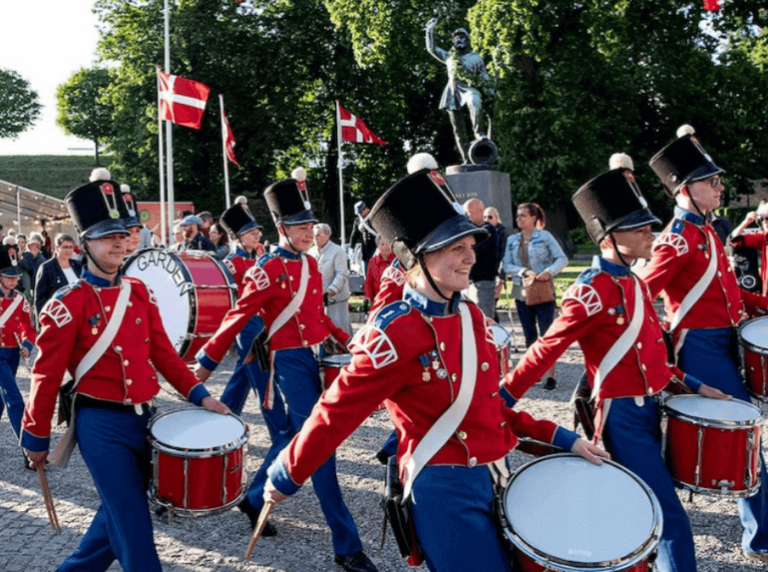
Photo credit: Visit Fredericia
The Battle Begins
There was no way out in the morning of 6 July 1849. Under the cover of darkness, the troops of Schleswig-Holstein under the command of Eduard von Bonin stood at the gates of the fortified town of Fredericia. But the defending Danes had a plan: To deter an impending attack before it could even start, the Danish troops under the command of General de Meza decided to strike first. And so they did: All hell broke loose when they fired their mortar batteries and advanced on horses and on foot to block the enemies’ columns. Danish General Olaf Rye charged ahead, wanting to bypass parts of the Schleswig-Holstein units. Being out on his own, he came under fire and his horse was shot. He then continued on foot and was shortly after shot in the leg and abdomen himself. He died within 2 hours after the start of the battle; at 3 in the morning.
Stalemate and Victory
With the death of one of only three Danish generals, Olaf Rye, the battle came to a stalemate. But just one hour later, at 4 am, the Danish troops could reinforce their flank with their 8th battalion and the half-battery Tillisch, which to rapid advancements and 300 prisoners. The 1st brigrade of the forces of Schleswig-Holstein had to withdraw. In the next few hours, the Danes would likewise advance along other parts of the battle line, withstanding a brief counterattack by Schleswig-Holstein. Ultimately, the Danish defenders kept holding Fredericia and concluded the battle victoriously on the same day it had started.
The Prelude
The Battle of Fredericia was caused by the ongoing conflict between Denmark and the Duchies of Schleswig and Holstein, which eventually led to the First Schleswig War (1848–1850). Schleswig and Holstein were duchies with predominantly German-speaking populations, while Denmark was primarily Danish-speaking. The question of whether these duchies should be part of Denmark or the German Confederation led to tensions The death of the Danish king, Frederick VI, in 1839 reignited the question of the succession of the duchies. The German-speaking population of the duchies supported a separate administration from Denmark, while Denmark wished to maintain control. Ultimately, in 1849, Denmark issued a new constitution that incorporated Schleswig into the Danish state, triggering a rebellion by the German-speaking population of the duchies. Fredericia itself was strategically important as it is situated on the waterway Little Belt, which is one of Denmark’s most famous nature parks today.
The Aftermath
The Battle of Fredericia marked a turning point in the war and helped to boost Danish morale. Following their defeat at Fredericia, the Schleswig-Holstein forces retreated northwards. The Danish army pursued them and won several smaller engagements in the following weeks. However, the war continued for several more years, with both sides experiencing victories and defeats. The conflict was eventually concluded with the London Protocol in 1852, which reaffirmed Danish control over the duchies of Schleswig, Holstein, and Lauenburg.
