
Release peace: the magazine
Release peace: the magazine
Analysis & Background Stories on International Affairs
A Look at Access to Education for Roma Children in Czechia
Written by: Leah March
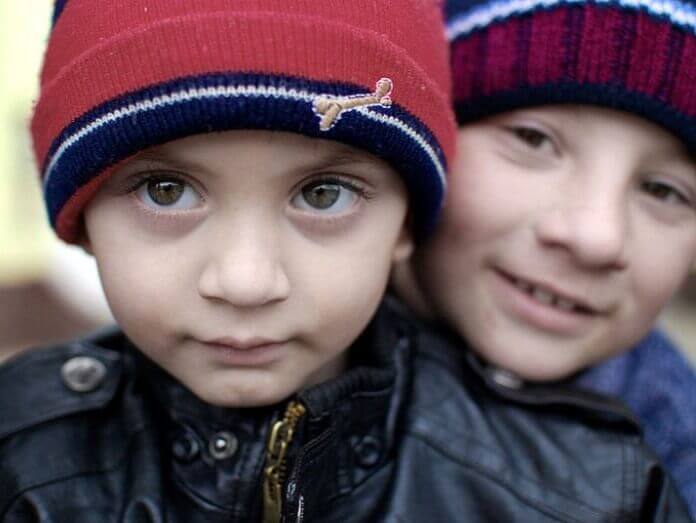
Image credit: Marc Swenker
On the Margins of Democracy
Life for Roma children in Central Europe has never been easy. The community has long been the target of discrimination across the continent. Amongst other areas of life, discrimination against Roma children is acutely felt in the classroom through policies and practices that perpetuate their de-facto segregation. In a 2007 landmark case against the Czech Republic, the European Court of Human Rights found that Roma students were disproportionately funneled to schools designed for the mentally disabled. The status of the Roma people in Czechia following the fall of the Iron Curtain in 1989 is particularly significant. The period marked a transition from a Soviet-aligned regime to a democratic governance structure. This presented new opportunities for civil rights advocacy. Despite this progress, the Roma community has continued to face systemic challenges. The Czech Republic’s history of democratic advocacy during the Soviet regime highlights its unique position to lead in the sphere of Roma inclusion.
Struggles of the Roma People
The Roma are a historically nomadic group consisting of several ethnically distinct subgroups. They are thought to have originated in northern India and migrated through Central Europe during the Middle Ages. Relations between the Roma and the nations they traveled through have long been fraught. Throughout the Middle Ages, under Habsburg rule, they were enserfed and often expelled. In the 20th century, the Roma were especially targeted by the Third Reich, which is estimated to have murdered between 500,000 and 1.5 million Roma during the Holocaust. Under communism, they were forced to settle in ghettos and had difficulty obtaining citizenship and the associated rights when the Iron Curtain fell. Estimates vary, but around 250,000 to 300,000 Roma are thought to live in the Czechia, accounting for slightly under 3% of the population.
School Segregation
By the Czech government’s own analysis, Romani children are still taught separately in all-Roma classes, despite the abolition of special schools for Romani students in adherence with the 2007 judgment. The analysis also confirms that schools attended by more Roma children are of lesser quality than those attended by fewer Roma children. Despite accounting for less than 3% of the population, approximately a quarter of Roma students in the country are educated in programs with reduced demands. In the Czech Republic and Slovakia, which have the highest percentages of Romani students in remedial schools, the geographic distribution of these schools tends to correlate with the size of local Roma populations. These schools are intended for students who struggle to meet standard educational requirements, but in practice, they frequently lead to lower educational outcomes and limit opportunities for Roma children. According to the European Roma Rights Centre, this and other evidence indicates that such schools function as a “de facto substandard parallel education for Roma,”
Incentives and Disincentives
Educational inequalities among the Roma have been cited as both a cause and an effect of poverty. An upside of the remedial schools is that they often provide material benefits, such as free books and lunches. These offerings can provide economic relief for struggling Romani parents. The European Roma Rights Centre suggests that the additional financial assistance offered by the state for students with disabilities creates an incentive for poor Roma families to send their children to these remedial schools. The additional funding provided to schools for supporting special needs students creates a troubling incentive for schools to diagnose learning impairments liberally. A 2015 study found that only 21% of Roma students complete secondary education (either general or vocational), compared to 84% of their ethnic Czech counterparts. This severely damages their employment prospects.
A Vicious Cycle
The cycle is vicious: UNICEF finds that poverty plays a key role in low educational outcomes for Roma students. This increases the difficulty of paying transportation costs and raises the likelihood that these students will drop out. For poor families, the opportunity cost of education becomes prohibitively high. Reports of racial bullying against Roma students abound in standard schools, as do accounts of harassment by teachers. Language barriers also create additional difficulties for Roma students. While many Roma students speak Romani at home, lessons and tests are conducted in Czech, leading to poor scores and misdiagnoses of impairment. This issue is conversely complicated by the limited language instruction in Czech remedial schools. This further suppresses Roma’s integration into the Czech culture and workforce.
Where Do Things Now Stand?
In response to the 2007 judgment, the Czech Ministry of Education adopted a national Action Plan outlining steps for integrating Roma students into mainstream schools. The plan included familial, financial, and teaching support for Roma students. While this resolution seemed promising, its lackluster impact has attracted both domestic and international criticism. In 2014, the EU initiated infringement proceedings against the Czech Republic for violating anti-discrimination laws. This action was prompted by a 2013 survey that found a continued 28% disproportion of Roma students in remedial schools. In 2016, the Czech Ministry of Education responded by implementing reforms aimed at Roma integration, including the use of teaching assistants and individualized learning plans.
The European Commission Report
Later, a 2022 report by the European Commission noted that, although some funds had been allocated to promote Roma inclusion in schools, de facto segregation has largely persisted. In 2023, the Czech Ministry of Education faced further criticism from Amnesty International and the Council of Europe’s Commissioner of Human Rights for its lack of progress on Roma educational inclusion. In response, the Ministry developed another Action Plan, proposing the implementation of guidance counselors and educational methodologists in schools to reduce dropouts among Roma students. The Ministry planned to collaborate with researchers to establish reforms for ending ethnic segregation. In October 2024, the EU Commission further demanded better inclusion practices for Roma students. If the Czech government fails to respond within the allotted two months, the EU could initiate another infringement proceeding.
Efforts to Integrate Roma Students
Although progress has been slow, political pressure to integrate Roma students into mainstream classrooms has remained consistent. Grassroots projects have proven to be the most successful in narrowing remaining gaps in local-level implementation. A case study is Life Together, a localized NGO in Ostrava, Czechia, implements a holistic focus on participation, dialogue, empowerment, and training for local Roma families. By forming neighborhood community councils in Ostrava, the group effectively addresses specific needs and provides a platform for Roma representation.
