
Release peace: the magazine
Release peace: the magazine
Analysis & Background Stories on International Affairs
A History You Might Now Know: The Motivations of Woodrow Wilson
Written by: Dominic O’Brien
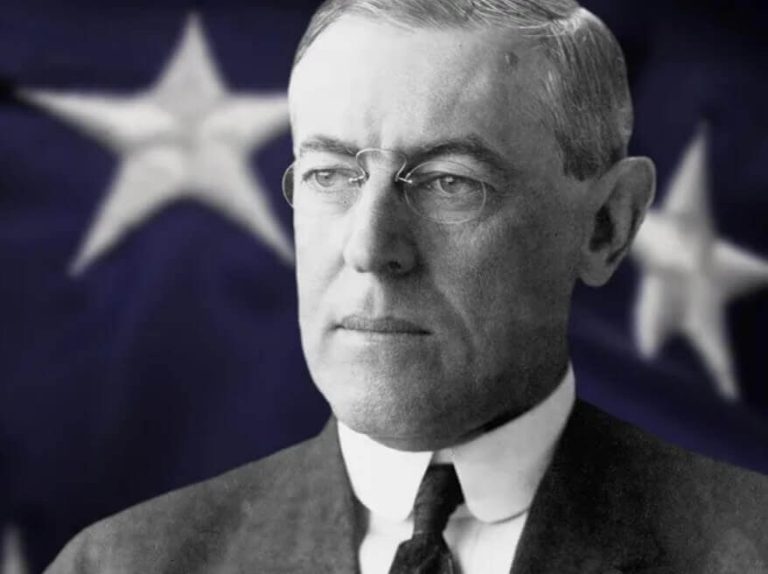
image credit: Britannica
The 28th President
For the better part of the last 100 years, the United States has been the world’s predominant power. Many around the world now consider it as the standard in international affairs for the United States to be involved in global affairs. Yet, for most of its history, the United States was an isolationist country that typically did not seek to interfere with global affairs. This all changed when Woodrow Wilson became the 28th President of the United States in 1912. Best known for his infamous 14 Points, which helped bring about peace at the end of World War I, Wilson might have been the only politician of his time who could have taken the United States out of isolationism and into internationalism – a legacy that has lasted for generations. This article will zoom in on the background of Woodrow Wilson, his beliefs, and the upbringing that made him the president he became.
Wilson’s Upbringing and How it Shaped His World View
Thomas Woodrow Wilson was born on December 28, 1856, in Staunton, Virginia. From an early age, he was exposed to both political and theological debates. This exposure is attributed to his father, Joseph Wilson, a minister who helped found the Presbyterian Church in the Confederate States of America, which later became the Presbyterian Church of the United States. Joseph would take young Wilson to debates all over the nation, where Wilson saw both strangers and his father debating various topics. Joseph also began to teach his son how to conduct sharp and persuasive debates from an early age.
Both the exposure to heavy political discussions and being raised by a fervently religious father led to Wilson’s political and theological ideologies beginning to merge into one. This led to him to developing a moralistic view of the world, meaning that Wilson saw both himself and the United States as possessing the highest moral authority. Wilson held this perspective much before entering public office, and it only strengthened further throughout his presidency.
The Superiority of Democracy
Wilson wanted to establish a better world in his eyes. He wanted the United States to be the leader in a newfound age of democracy and global cooperation. To succeed in this, the United States in his view needed to break free from its isolationist shackles and get involved in other nations’ affairs, helping them to establish democracies. Based on Wilson’s Presbyterian convictions, his father’s teachings, and a strong sense of nationalism, he saw democracy, particularly the U.S.-styled democracy, as the best form of government in the world. He wanted to be the one to lead the United States onto the global stage so that all other nations could see just how great democracy and the United States truly were. Unfortunately for Wilson, his plans came to a halt when Europe became embroiled in World War I.
Wilson’s Vision and His Attitude Towards Differences
Wilson held his views in the utmost regard and had a very unfavorable and at times dismissive opinion of those with dissenting beliefs. Wilson was not one for listening to those who disagreed with him or for compromising on issues he had a strong stance on. According to Professor Margaret MacMillan at the University of Oxford, Wilson’s upbringing that made him “intolerant of differences and blind to the legitimate concerns of others”, and anyone who opposed him was “not just wrong but wicked.” Wilson never wanted to falter on his ideals, even when it made more sense politically to do so. Wilson’s religious upbringing also meant he saw disagreement with his policies as equivalent to an attack on his religion.
Wilson’s Reasoning for Joining World War I
Wilson saw war as the antithesis of peace and democracy; however, he did see an opportunity in it. Wilson saw the United States as the savior and believed Europe, along with the rest of the world, should follow in its idealist crusade against all that opposed freedom. During World War I, Wilson wanted to be a peace mediator between the Entente, led by Great Britain and France, and the Central Powers, led by the German Empire, bringing them together in a new world order ultimately led by the United States. However, his efforts to establish peace were turned down by both blocs of belligerent parties. After the German Empire sent the infamous Zimmermann Telegram on January 16 1917, the United States was thrust into World War I.
Wilson and the League of Nations
Wilson’s ultimate goal was the establishment of the League of Nations. The League, in Wilson’s eyes, would be a global governing body that could establish and maintain democracy and peace worldwide. He believed it to be his magnum opus, the foundation of a new world order of democracy and freedom with the United States at the helm. This was the final point in his infamous 14 Points Speech, as he wanted it to be the overarching objective of the Paris Peace Treaty. Wilson would stop at nothing to get the League of Nations off the ground, and eventually, he succeeded.
Wilson’s Legacy
Without Wilson, the United States may have taken decades longer to enter the global stage, if at all. His upbringing molded his progressive thought, which was unique for his time and led Wilson to establish the many precedents he set, such as the League of Nations, the opening of global trade, and establishing the United States as a global power. His moralistic view of the world drove him in a special way that set him apart from his predecessors as well as many of his successors. Many view Wilson’s personality as abrasive, and his unwillingness to compromise might have led to some of his ideas not being as effective as he had hoped. However, his idealism and his strong-willed approach allowed him to succeed with many of his policies. The world as we know it today has been shaped by Woodrow Wilson and his unique vision for the world.

